
$1,250 Per Employee for Training You're Already Doing
The Georgia Retraining Tax Credit is a state income tax credit that reimburses businesses up to $1,250 per employee, per year for training existing workers on new technology or systems. It's one of the most underused business incentives in Georgia. Most businesses that qualify have never heard of it.
If your company has rolled out new software, upgraded equipment, or moved employees off manual processes in the last few years, you've very likely been leaving money on the table
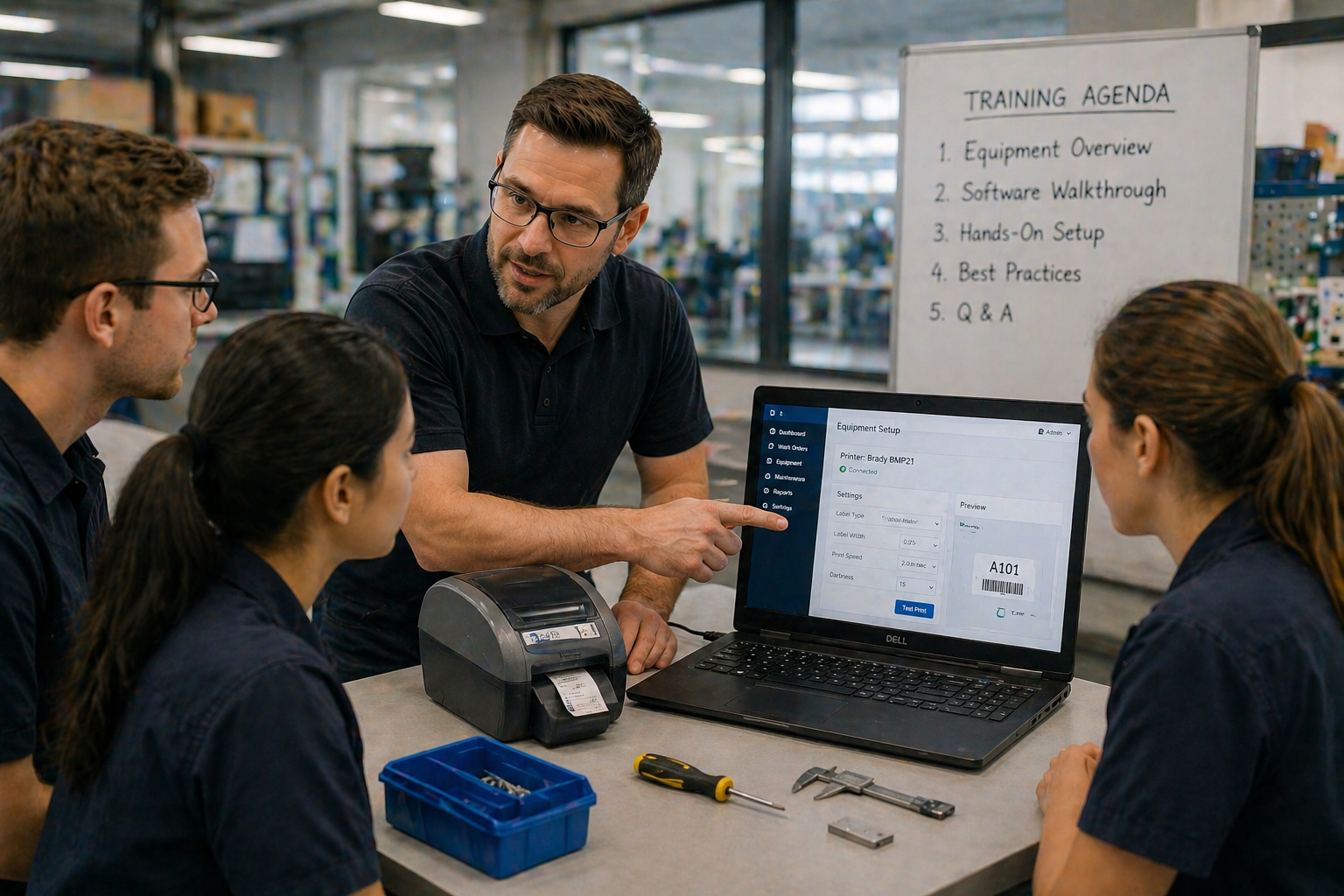
What is the Georgia Retraining Tax Credit?
The Georgia Retraining Tax Credit is an economic development incentive administered under O.C.G.A. § 48-7-40.5. Any business that files a Georgia income tax return is eligible. The credit offsets the direct cost of training existing employees on new technology, equipment, or software. The credit covers 50% of eligible training costs, up to $1,250 per employee each year.
The credit applies to training delivered by company trainers, outside vendors, technical colleges, or universities. There is no minimum company size and no requirement to create new jobs. The only requirement is that the training is tied to new or upgraded technology your business is actually using.
For CPAs: this credit is available to clients across industries, including manufacturing, healthcare, professional services, retail, and more. It stacks with other Georgia credits and does not require a pre-approval process, making it one of the more straightforward credits to document and claim.
Which businesses qualify for the
Georgia Retraining Tax Credit?
Any Georgia business with employees is worth evaluating. The credit does not target a specific industry. It targets a specific type of activity: training existing employees on technology that is new to them.
Common qualifying events include switching software platforms, upgrading to a new version of an existing system, moving from paper-based to digital processes, adding new production equipment, or rolling out a new module within a tool employees already use.
The examples span every industry. A medical practice rolling out a new EHR, a distribution company training warehouse staff on a new WMS, an accounting firm moving from desktop to cloud-based software, an auto dealership upgrading its dealer management system. What matters is whether employees received training on a technology that was new to them.
What kinds of training qualify?
Training qualifies when it is tied directly to a new or upgraded technology and delivered by a qualified source. Qualified sources include the software vendor, an outside training firm, a technical college, a university, or a company's own internal trainers.
Implementation and onboarding training for new software
Training on new or upgraded production or operations equipment
Conferences focused on new technology (not general professional development)
Lean manufacturing and Six Sigma training tied to new processes or systems
New office equipment training
What doesn’t qualify?

The credit is specifically for technology training. It does not cover:
Executive coaching or leadership development
Workshops for senior or middle management on non-technical topics
OSHA, EPA, or DOT compliance training
First Aid or CPR certification
Interpersonal skills or soft skills training
Conferences on non-technical subject matter
Examples of Qualifying Software and Systems
The Georgia Department of Economic Development has consistently recognized training on the following types of software and systems as eligible for the retraining tax credit:
Accounting, Finance, Billing, and Payroll Systems
QuickBooks, Sage, NetSuite, Xero, and similar platforms. Upgrades from desktop to cloud versions count, as do transitions between platforms.Warehouse and Inventory Management Systems (WMS)
SAP. Manhattan, etc. Especially relevant for distribution, logistics, and manufacturing companies.Job costing and estimating software
Procore, Sage, HCSS HeavyBid, and Buildertrend and similar platforms. Upgrades from desktop to cloud versions count, as do transitions between platforms.HRIS and Workforce Management
Paylocity, ADP Workforce Now, Workday, BambooHR. Any system handling HR data, time tracking, or payroll that employees were formally trained on.AI and AI-assisted tools
Microsoft Copilot, Google Workspace AI, GitHub Copilot, Cursor, Salesforce Einstein, Nuance DAX, and similar AI-powered platforms.Document Management Systems
Transitions from paper to digital, or between platformsCRM and Sales Platforms
Salesforce, HubSpot, and similar tools. Initial rollouts and major version migrations both qualifyElectronic medical records (EMR/EHR)
Epic Systems, Athena, eClinicalWorks. Quarterly/Yearly updates typically qualify due to extensive workflow changes.Dealer Management Systems (DMS)
CDK, Dealertrack, and Dealerlogix. Auto dealerships that have switched DMS platforms or upgraded existing ones.This is not a complete list, and the field is expanding fast. Businesses adopting AI tools, industry-specific platforms, or any software new to their employees are worth evaluating. The category matters less than whether the training was tied to something new.
What Georgia Businesses Have Claimed

The amounts vary by company size, number of employees trained, and how many qualifying years are still open for filing. Some examples from TaxCredible clients:
A Georgia consulting group claimed over $153,000 in retraining tax credits across multiple years. A dermatology practice qualified for more than $75,000 after implementing a new EMR system. A car dealership group secured $98,000 following a dealer management system upgrade.
Most TaxCredible clients have qualifying activity in the current year and in at least one prior open year. Amended returns can capture credits that would otherwise go unclaimed, which often makes the first conversation more valuable than expected.
How to claim the Georgia Retraining Tax Credit
The credit is claimed on Georgia Form IT-RC, filed with the business's annual Georgia income tax return. There is no pre-certification or advance approval required. The credit is calculated based on documented training costs and the number of employees trained. Here's how TaxCredible approaches it:
1. Identify qualifying activity
We review your training history, software implementations, and equipment purchases to determine which years and activities qualify.
2. Document and calculate
We collect the necessary records, run the calculations, and build an audit-ready package that clearly ties each training activity to the credit calculation.
3. File with your CPA
We prepare everything. Your CPA reviews, signs off, and files Form IT-RC with your Georgia return. The credit offsets your tax liability dollar for dollar.
For CPAs managing multiple clients, the process is the same. We integrate with your existing workflow and prepare everything needed for filing. You review and control the final deliverable.
Find Out What Your Business Has Already Earned
Most businesses that qualify for the Georgia Retraining Tax Credit have multiple years of eligible activity they haven't claimed. The credit is already on the table. The only question is whether you claim it.
If you're a business owner or a CPA with clients who've been upgrading technology, the conversation is worth having.
Frequently Asked Questions
-
The maximum credit is $1,250 per employee per year, or 50% of the per-employee training cost, whichever is less. The credit applies to each qualifying employee trained during the tax year.
-
No. The Georgia Retraining Tax Credit applies to training for existing employees. There is no requirement to hire new workers.
-
Any business that files a Georgia income tax return is eligible. There is no minimum company size, no industry restriction, and no revenue threshold. Sole proprietors, partnerships, LLCs, S-corps, and C-corps all qualify.
-
Yes, subject to Georgia's standard statute of limitations for amended returns. Many businesses claim multiple years of qualifying activity at once when they first learn about the credit.
-
Businesses must document the training activities, the number of employees trained, the cost of training, and the technology or system the training was tied to. Training must be delivered by a qualified source: a vendor, technical college, university, or internal trainer. TaxCredible prepares all documentation and builds an audit-ready package for each claim.
-
No. Training can be delivered by the software vendor, an outside training firm, a technical college, a university, or the company's own internal trainers. All qualify as long as the training is tied to new or upgraded technology.
-
Yes. The retraining tax credit can be claimed in the same year as other Georgia business tax credits, including the Job Tax Credit and the Investment Tax Credit.
-
Yes. The credit does not require in-person training. Online training, virtual instructor-led sessions, and e-learning tied to a qualifying technology all count.
-
Any software or system that is new to the employees being trained can qualify. This includes accounting software, HRIS platforms, CRM systems, EHR/EMR systems, warehouse management systems, dealer management systems, job costing tools, and document management platforms, among others.
-
Yes. CPAs file Form IT-RC on behalf of their clients as part of the Georgia income tax return. TaxCredible works directly with CPA firms to prepare the documentation and calculations, with the CPA reviewing and filing the final package.